
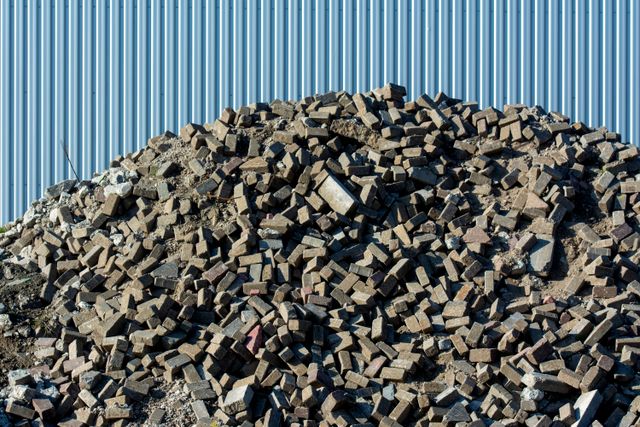
concrete sealing adelaide most people hear the words “recycled concrete” and picture an old driveway being smashed up.
They’re not wrong.
That’s usually where the story starts.
What surprises people is what happens next.
After more than twenty years building driveways, patios, exposed aggregate and slabs across Adelaide, we’ve watched recycled concrete go from something people barely talked about to a material homeowners genuinely ask about.
And it’s a fair question.
One thing we’ve noticed is that people often assume recycled means lower quality.
Sometimes they’re thinking about cheap products that don’t last.
Concrete doesn’t work like that.
Once old concrete is crushed and processed correctly, it can have a useful second life, particularly as part of the base beneath a new driveway or slab. That’s where we’ve seen it perform well over the years.
The funny thing is, most homeowners never realise they’re driving over recycled material.
Because they can’t see it.
They’re looking at the finished concrete on top.
We’re thinking about what’s supporting it underneath.
After doing hundreds of driveways, we’ve learnt that the quality of the base matters just as much as the concrete you park on every day.
If recycled material is properly processed, compacted and suitable for the site, it can provide a solid foundation.
If it isn’t…
Well, that’s where problems begin.
Here’s where people get caught out.
They assume all recycled concrete is the same.
It isn’t.
Like anything in construction, the quality depends on how it’s been handled. Material that’s been sorted, crushed and graded properly is a completely different product from random demolition rubble tipped into a hole.
We’ve dug up enough old driveways around Adelaide to know the difference.
Sometimes you uncover a beautifully prepared base that’s still doing its job decades later.
Other times you find bricks, chunks of asphalt, broken tiles and all sorts of surprises that should never have been buried beneath a driveway in the first place.
Experience teaches you pretty quickly that not all recycled material deserves the same reputation.
Adelaide’s clay soil doesn’t hand out second chances either.
Reactive ground has a habit of exposing weak preparation over time. Summer dries everything out. Winter brings moisture back into the soil. That cycle repeats year after year, quietly testing whatever is sitting underneath the slab.
One thing we’ve noticed is that the base doesn’t have to be fancy.
It has to be consistent.
A well-compacted recycled base will outperform a poorly prepared layer of brand-new material every day of the week.
That’s not a theory.
We’ve seen it.
People also assume recycling is only about reducing waste.
That’s certainly part of it.
Every old driveway that’s crushed and reused instead of heading straight to landfill is one less load of material being discarded. That’s a positive outcome.
But there’s another benefit that doesn’t get talked about much.
It encourages people to think differently about construction.
Instead of seeing demolition as the end of a material’s life, it becomes the beginning of another one.
We’ve always liked that idea.
Another thing we’ve noticed is that homeowners often focus on the visible concrete while forgetting how much excavation happens before the pour.
If an existing driveway has reached the end of its life, there’s a good chance parts of that material can be processed and used elsewhere in the construction industry instead of becoming waste.
That’s a far better outcome than filling up landfill for no good reason.
Of course, recycled concrete isn’t the answer to everything.
There are applications where fresh materials are still the better choice.
The key is understanding where each one belongs.
Trying to save money by using unsuitable material where it shouldn’t be used usually costs far more in the long run.
Almost every callback we’ve had started because somebody tried to cut corners beneath the surface.
Not because recycled material was used.
Because the wrong material was used.
There’s a big difference.
The funny thing is, homeowners rarely remember what was underneath their driveway after it’s finished.
They remember whether it drains properly.
Whether it stays level.
Whether it still feels solid after another Adelaide summer and another wet winter.
That’s the real test.
Not what label was attached to the base material, but how the entire system performs over time.
We’ve also learnt that sustainability isn’t always about buying something new.
Sometimes it’s about getting more life out of something that’s already served its original purpose.
Old concrete has spent decades doing its job.
If parts of it can help support the next driveway, that’s a pretty sensible outcome.
At Pro Concreting Adelaide, we’ve always believed recycled concrete deserves to be judged the same way we judge every other material.
Not by the name.
By the preparation.
By the workmanship.
By how it performs once Adelaide’s weather, reactive clay, heavy vehicles and everyday life have had a chance to test it.
Because that’s where every material proves its worth.
Not on the day it’s delivered.
But years after everyone has forgotten where it came from.